
People say the economy is strong & I say it stinks since too many Americans are falling through the cracks. We need a higher level of planning & thinking than current-day politicians are willing to do. We’re seeing how they tend to pass out short-term goodies like the tax cuts, which mainly serve to increase our federal deficit & don’t get at the core of our economic problems. Without that temporary caffeine buzz artificially propping up some of the economic data, only the most loyal Trumpeter cultists would still be supporting the prez. His approval numbers might otherwise now be in the Nixon range, down somewhere in the 20’s. Americans are growing disgusted by what most of us see as Trump’s jackass form of governing designed to please his base, not really doing what’s best for America as a whole. If we’re to make real progress against the long-term structural problems of stagnant wages, income inequality & restoring a struggling middle class, the initiative is likely coming from someplace other than DC, where the hyperpartisanship & focus on beating the other party strangle attempts at formulating good ideas for moving our nation forward.
Trump touts his tax cuts as his greatest legislative achievement (really his ONLY major legislative achievement). The GOP plans to run on those tax cuts for the November elections, which the cuts themselves have for some sparked a sense of economic optimism out there, which that psychology by itself can boost economic growth. And I do agree the 35% corporate rate needed reduced, but the bill itself was so poorly constructed, it’s not reaching those it was intended to benefit. We’ll find out in due time whether those basking in this pro-Trump feel-good moment can sustain that throughout the year. By the numbers we’ve already seen in previous Part 3 messages from The Voracs, how the vast majority of increased revenue have gone towards things like stock buybacks instead of workers’ wages, with recent reports showing the benefits going to corporations are outpacing what workers are receiving at an astounding ratio of 28:1. But the concerns don’t end there. For a party so concerned about deficits this past decade that helped fuel the tea party movement, their silence over the way these tax cuts are shooting up the federal deficit smells of hypocrisy, which from political updates like us-records-biggest-budget
The Treasury Department announced on Monday that it had recorded its largest monthly budget deficit in six years in February. The deficit came in at $215 billion for the month, which came as revenue declined. The department said fiscal income decreased to $156 billion, which marked a 9 percent drop from last year, while spending came in at $371 billion after it rose 2 percent. The announcement comes roughly three months after President Trump signed the Republican-backed tax-reform plan into law. Critics of the plan have expressed concerns that the government’s debt would increase under the plan.
Another primary factor in our rising federal deficit comes from us-spends-twice-as-much-a
The United States spent twice as much on health care than ten other high-income countries in 2016, largely because of the high costs of prescription drugs, administrative overhead and labor, a new study released Tuesday indicates. While Americans don’t use more services than people in high-income countries, the U.S.’s overall health spending still topped that of the United Kingdom, Canada and Germany, according to a study in the Journal of the American Medical Association. The U.S. spent nearly 18 percent of its gross domestic product (GDP) on health care in 2016. Spending in other countries ranged from 9.6 percent of Australia’s GDP to 12.4 percent of Switzerland’s GDP.
In the U.S., high health-care spending is driven by expensive prescription drugs, high-paid health professionals and administrative costs. Spending per capita for prescription drugs was $1,443 in the U.S., compared to a range of $466 to $939 in other countries, the study found. Doctors in the U.S. are also paid much more compared to other countries. Researchers found that general physicians can expect to make about $218,000 in the U.S., compared to a range of $86,600 to $154,000 in other countries. Administrative costs on health care consume 8 percent of the U.S.’s GDP, compared to a range of 1 percent to 3 percent in other countries.
High health-care spending in the U.S. does not translate to better health outcomes, the report found. Life expectancy in the U.S. is 78.8 years, compared to the average of 81.7 years among the countries studied. Infant mortality was higher in the U.S. than the other countries, with 5.8 deaths per 1,000 live births in the U.S. and 3.6 deaths per 1,000 live births in all 11 countries. The U.S. also has more uninsured citizens than any of the countries examined, with about 10 percent of Americans lacking insurance coverage.
Now Trump is even talking about a phase 2 to the Trump tax cuts, assuming he wants to increase our $1 Trillion annual federal deficit even higher. Another budget buster driving up our debt that Trump still supports are tax extenders, another sign of the incompetence oozing out of the president, GOP & DC leadership in general: the-insane-special-br
In choosing advisers, Trump often resorts to high public profile TV commentators instead of the most experienced & capable. Kudlow is a disciple of the old-fashion supply-side trickle down, where he is still basking in the growth spurred during the Reagan years that was inevitable when they halved the top tax rate of 70%. So his only contribution to economic policy is to live off the nostalgia of only wanting to cut taxes for the wealthy, no matter absurd it is in today’s reality. Inside larry-kudlow-may-have-been-mor
You see there are two kinds of Republicans allowed in the White House now. There are the Trump supporters — nationalists, populists, whatever you would like to call them. And then there are the guys that make Donald Trump feel young again. These are the Reagan administration replays, including supposed fiscal conservatives like Stephen Moore. They remind Trump of a time when he ran around New York City in a gaudy limousine while a man who once played a cowboy on TV was president. They are the ones who champion eternal tax cuts and have conveniently forgotten that Reagan wrote the rules of global trade that Trump is now tearing apart. Kudlow represents the latter camp, and in him we have the perfect example of how this crowd — which has been deaf to decades of evidence that their trickle-down policy Gospel doesn’t work — contorted willingly into men who could also tout Donald Trump’s anti-free trade agenda. It didn’t take much doing. All Trump had to do was make these men feel relevant again — something they haven’t been in quite some time.
David Stockman, who was the Office of Management and Budget Director under Reagan and Kudlow’s former boss, agrees. He told CNBC that Kudlow won’t be able to pull Trump “off the deep end” of his populist agenda. Either way, Stockman said, any damage caused by Trump’s trade agenda is dwarfed by the economic disaster that will be wrought by the massive spending and tax cuts that Republicans of Kudlow’s denomination passed last year. Kudlow, he said, is a “Wall Street cheerleader.”
Heading toward the bottom of the Related Articles, Rubin explains in this paragraph from (how-trump-messed-up-his-2020-
The poll also found, “Only 27 percent of American voters say they are proud to have Donald Trump as president, while 53 percent say they are embarrassed – a 2-1 negative.” In other words, a catchy campaign message could suggest it would be nice to have a president who doesn’t make you cringe. One additional benefit of an aspirational message such as “America Can Do Better” is that it does not ask Trump voters to admit they were snookered by a snake oil salesman. It puts the onus on Trump, who has not performed as his supporters would have hoped. Don’t get me wrong — Trump did con a great number of voters, but voters don’t like to admit it, even when the evidence is right in front of their faces. This allows Trump voters to remain convinced Trump was better than Clinton, but we can do better than Trump. Trump’s weakness (one of them) is his gigantic ego, which never permits him to accept blame, error or imperfection in himself. At bottom, this is a hopeful, optimistic country which is why — you got it — we can do better.
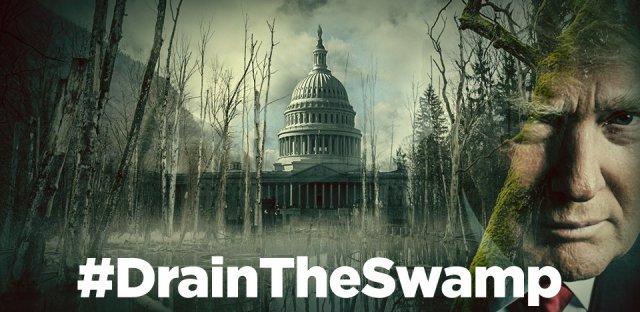
The echo mantra is to drain the swamp, but we really need the help of experienced civil servants who know what they’re doing, figuring out what our problems are & taking actions to solve them. What needs drained from DC are the extremists on both sides entrenched in their hardcore views which won’t allow us to pass constructive legislation. We need leaders willing to fix our broken system by learning to work together, since the American people do want DC to get things done: will-the-united-states-ever-ge
Many Americans presume that our democracy is unraveling because our leaders are lazy or incompetent. But my years working in government have convinced me that’s not the case. The vast majority of individuals who aspire to public service—men and women in both parties—mean to serve the public. Indeed, as many Americans revile Congress, the truth is that our nation’s capital is full of optimistic, hardworking and capable people. Here’s the problem: Good public servants from both parties are trapped in a broken system that discourages them from pursuing America’s best interests. People drawn to politics for the right reasons are compelled, once elected, to toe the party line—or risk becoming impotent iconoclasts, independent but ineffective. In all too many cases, the path to power compels thoughtful representatives to comply with party orthodoxy rather than do what they know is right. Rational short-term choices steer decent people away from the long run greater good.
The effects are unmistakable. Today, even when thoughtful, bipartisan ideas are available Congress remains deadlocked. The Problem Solvers Caucus, a bipartisan bloc of 48 members, have crafted three big substantive compromises since the last election: one on health care reform; one on immigration and border security; and one on infrastructure. But even with these bipartisan packages in hand, they’ve been stopped by a policymaking process that kills everything but the handful of ideas supported by ideological extremists. If we’re going to get the Congress moving again, we need to address the way it works. First, let’s remember that Congress, while never perfect, hasn’t always been like this.
Regrettably, that mentality now prevails. The House of Representatives is held in perpetual hostage by small bands of extremist members intent on excluding the other party from the policymaking process. The veto power of congressional extremists and the imperative for members seeking advancement to always toe the party line, has led to legislating by the lowest common denominator – usually nothing at all. Americans are frustrated with Washington—and rightly so. But rather than focus exclusively on what Washington needs to do to address our nation’s big challenges, it’s time we look at how it might get those things done. This is a moment to step back and take a serious look at process reform. If we’re going to reawaken the magic of American democracy, we need new rules. A broken system cannot deliver the progress Americans demand.
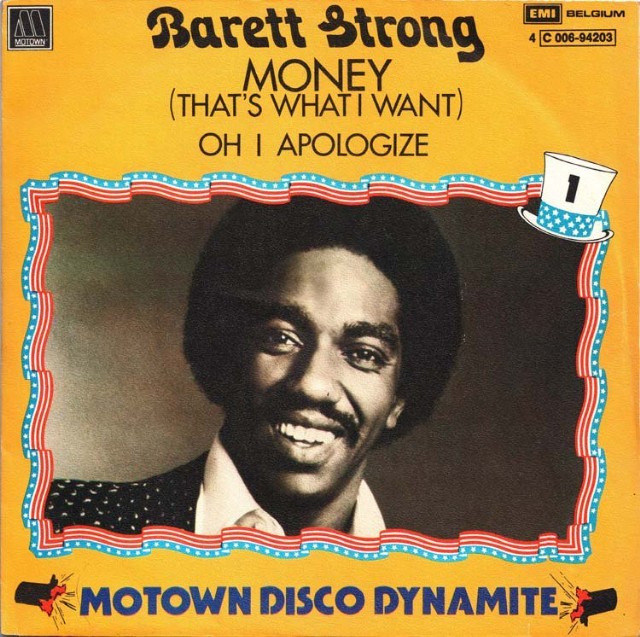
Throughout his business career, Trump relentlessly pursued lots of money whatever it took. Now Mueller is asking for documents to keep pursuing the money trail. There’s no doubt they would both say in regards to what their respective missions are on this topic of money, “it’s what I want.”
Recent Comments