
Traditionally, Americans could look forward to a comfortable retirement. After four decades in an office or a factory, sometime in their 60s they would lay down their burdens and enjoy a final couple of decades with time to relax, spend time with family and friends, and reflect on their life. But since the financial crisis, older Americans have been increasingly staying in the workplace. Some see this as a positive trend, because it adds to the economy. But others rightfully view it with trepidation, because there’s the distinct possibility that many of these elderly people just can’t afford to retire. Whether their nest eggs were wiped out in the housing crash, or they just didn’t save enough, or whether their kids don’t make enough money to support them, the decline of retirement seems like an ominous development. The pressures on older Americans to work will likely only become greater in the coming years. This is because the young, working population needed to support retirees will see slower growth, and possibly outright shrinkage. As recently as 10 years ago, the U.S. had unusually high fertility rates for a developed nation. The total fertility rate — the number of children a woman can be expected to have over her lifetime — was about 2.1 children per woman, which is the level required for long-term population stability. But since then, the rate has fallen to 1.8 in 2016, implying long-term population shrinkage.
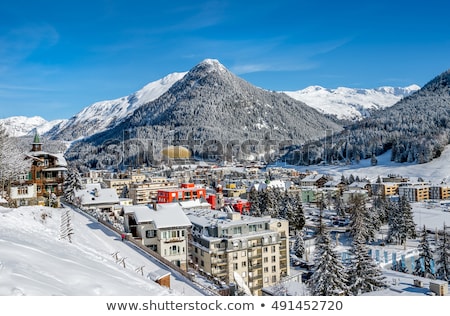
Pity the poor billionaire, for today he feels a new and unsettling emotion: fear. The world order he once clung to is crumbling faster than the value of the pound. In its place, he frets, will come chaos. Remember this, as the plutocrats gather this week high above us in the ski resort of Davos: they are terrified. Whatever dog-eared platitudes they may recycle for the TV cameras, what grips them is the havoc far below. Just look at the new report from the summit organisers that begins by asking plaintively, “Is the world sleepwalking into a crisis?” In the accompanying survey of a thousand bosses, money men (because finance, like wealth, is still mainly a male thing) and other “Davos decision-makers”, nine out of 10 say they fear a trade war or other “economic confrontation between major powers”. Most confess to mounting anxieties about “populist and nativist agendas” and “public anger against elites”. As the cause of this political earthquake, they identify two shifting tectonic plates: climate change and “increasing polarisation of societies”.In its pretend innocence, its barefaced blame-shifting, its sheer ruddy sauce, this is akin to arsonists wailing about the flames from their own bonfire. Populism of all stripes may be anathema to the billionaire class, but they helped create it. For decades, they inflicted insecurity on the rest of us and told us it was for our own good. They have rigged an economic system so that it paid them bonanzas and stiffed others. They have lobbied and funded politicians to give them the easiest of rides. Topped with red Maga caps and yellow vests, this backlash is uglier and more uncouth than anything you’ll see in the snow-capped Alps, but the high rollers meeting there can claim exec producer credits for the whole rotten lot. Shame it’s such a downer for dividends. This week’s report from Oxfam is just the latest to put numbers to this hoarding of wealth and power. One single minibus-load of fatcats – just 26 people – now own as much as half the planet’s population, and the collective wealth of the billionaire class swells by $2.5bn every day. This economic polarisation is far more obscene than anything detested by Davos man, and it is the root cause of the social and political divide that now makes his world so unstable. No natural force created this intense unfairness. The gulf between the super-rich and the rest of us did not gape wide open overnight. Rather, it has been decades in the widening and it was done deliberately.They care about other people’s problems – so long as they get to define them, and it’s never acknowledged that they are a large part of the problem. Which they are. If they want capitalism to carry on, the rich will need to give up their winnings and cede some ground. That point evades them. Welcoming Donald Trump last year, Klaus Schwab, Davos’s majordomo, praised the bigot-in-chief’s tax cuts for the rich and said, “I’m aware that your strong leadership is open to misconceptions and biased interpretations.” The super-rich don’t hate all populists – just those who refuse to make them richer. Cutting the ribbon on this new economic order back in the 80s, Ronald Reagan claimed that the nine most terrifying words in the English language were: “I’m from the government and I’m here to help.” A joke perhaps, but the intention was real enough. The last three decades have seen the political and economic elites hack away at our social scaffolding – rights, taxes and institutions. It proved profitable, for a while, but now it threatens their own world. And still they block the quite reasonable alternatives of more taxes on wealth, of more power for workers, of companies not run solely to enrich their owners. The solutions to this crisis will not be handed down from a mountain top to the grateful hordes: they will rely on us taking power for ourselves. Three decades after Reagan, the nine most laughable words in the English language are: “I’m from the elite and I’m here to help.”
The annual confab of the captains of global industry, finance, and wealth is underway in Davos, Switzerland at the World Economic Forum. Meanwhile, Oxfam reports that the wealth of the 2,200 billionaires across the globe increased by $900 billion last year — or $2.5 billion a day. Their 12 percent increase in wealth contrasts with a drop of 11 percent in the wealth of the bottom half of the people of the world. In fact, the world’s 26 richest billionaires now own as much as the 3.8 billion who comprise the bottom half of the planet’s population. If Davos’s attendees ignore all this, and blame the rise of right-wing populism around the globe on racism fueled by immigrants from the Middle East and from Central America, they’re deluding themselves. The real source of the rise of repressive authoritarianism, nativism, and xenophobia in the United States as well as Italy, Spain, Austria, Poland, Hungary, Denmark, Bulgaria, Greece, France, and Britain is a pervasive sense that elites are rigging the world economy for themselves. And, guess what? They are. Message to Davos Man (and Women): Either commit to pushing for broader prosperity and democracy, or watch as trade wars, capital controls, and isolationism erode global prosperity (including yours) and global peace.
It’s hardly the first time American workers have been pawns in larger power games. It happens all the time in the private sector. A private-equity firm gains control and eliminates a sizable portion of a company’s jobs. A merger generates a frenzy of payroll cuts. New management threatens to ship jobs offshore if workers don’t accept wage cuts. American capitalism has become more arbitrary and autocratic than at any time in modern history. Not only have most paychecks stopped rising, but economic security has vanished. Few working people feel any sense of control over their lives.This has happened for several reasons. Capital markets are more demanding. Wall Street is insisting that corporations squeeze out every ounce of profit quarter by quarter. It’s easier than ever to outsource jobs to contractors, foreign-based workers, or automated machines, all of which will do them more cheaply. Economic power has become more concentrated in a relative handful of large corporations that can keep a lid on wages even in a tight labor market. Meanwhile, labor union membership has declined precipitously. Most workers no longer have a way to fight back. In the 1950s, over a third of all US private-sector workers were unionized; today, fewer than 7% are. Unionization in the public sector is also dropping, from 38.7% in 1994 to less than 35% today. All of which may explain why, as America begins ramping up to the 2020 presidential election, Democratic candidates are talking about empowering workers.
Pollster Mallory Newall on Thursday said that there is a broad agreement among Americans that the higher income earners should pay more in taxes. “Back in 2017, we found that three-quarters of Americans would support the wealthiest Americans paying more in taxes,” Newall, research director at Ipsos, told Hill.TV’s Jamal Simmons on “What America’s Thinking.” “Regardless of if you’re just talking broadly if you’re putting out a specific proposal, there is broad support for the wealthiest Americans to pay more or pay their fair share,” she continued. Rep. Alexandria Ocasio-Cortez (D-N.Y.) has recently brought up the issue of increasing taxes on the wealthy, proposing a 70 percent marginal tax rate on the wealthiest Americans earlier this month. Recent polling appears to show that the majority of Americans back the freshman congresswomen’s proposal. A Hill-HarrisX survey released earlier this month found that 59 percent of Americans support raising the tax rate to 70 percent on the wealthiest citizens.
Raising taxes on wealthy Americans in response to the defining issue of our time – income inequality – could have huge and unintended consequences on markets, according to Ray Dalio, the founder of the world’s biggest hedge fund. Dalio, who runs $160 billion at Bridgewater Associates, believes the political reaction to the yawning gap between the haves and have-nots will likely determine who wins the 2020 presidential election. But there are serious impacts to be considered ahead of such changes, including Rep. Alexandria Ocasio-Cortez’s proposed 70 percent tax rate on earnings above $10 million, he said. “How tax rates are changed will have a huge effect on incentives and could have a huge effect on capital flows, and that will have big effects on markets and economies,” Dalio said in an exclusive interview on the sidelines of the World Economic Forum in Davos. “It’s going to be a bigger market-influencing issue than people now realize.”The 69-year old hedge fund titan has been outspoken that the brand of capitalism that has allowed for the rise of a global class of super wealthy like himself hasn’t worked out for most Americans. In November, he pointed out that the top 1/10th of 1 percent have a net worth equal to 90 percent of the population, a situation similar to the 1930s. “This polarity issue — the income and opportunity gap — will determine who is elected and what approaches are going to be used to deal with that issue,” Dalio said. “We have entered the presidential election cycle in which different policies and their probabilities of getting enacted to deal with this income-opportunity gap issue will be really important; probably the most important issue of our time.”
Agreement on the problem: Dalio made the comments in response to a question about Ocasio-Cortez’s proposal to roughly double the top tax rate, which she made during a recent interview on CBS’ “60 Minutes.” The idea appears to have bipartisan support: A recent poll found that 59 percent of voters were in favor of the idea, and even 45 percent of Republicans signaled approval. The idea from Ocasio-Cortez, who identifies as a Democratic-Socialist, comes just a year after President Donald Trump’s overhaul of corporate and personal taxes, which has allowed U.S. companies to save billions of dollars in taxes. While other members of the financial elite in attendance at Davos, the annual gathering of 3,000 of the world’s richest and most powerful people, called the idea ” scary” or were dismissive of its chances, Dalio was more measured in his answer.
“We’re in agreement on the problem that’s behind that suggestion,” Dalio said. “We have to make capitalism work for the majority of Americans. I don’t know that we’re in agreement on the mechanics.” In particular, Dalio is concerned about the unintended consequences of raising marginal taxes on the wealthy, and how the additional tax revenue will be used, which could impact U.S. productivity. “If we’re to have a 70 percent marginal tax rate, most individuals affected by it will calculate whether they should instead operate as a corporation in order try to convert ordinary income to capital gains, so I wonder how that will be handled,” Dalio said. “And I wonder what will be done to influence whether capital will leave the country.” Dalio is not alone in worrying about the proposed tax hike. Former Federal Reserve Chairman Alan Greenspan said it would be a “terrible mistake” that would harm the economy.
We are experiencing a skills scarcity that is a defining feature of today’s economy and a major obstacle for many U.S. companies. The irony is that, while companies are scrambling for qualified employees, an estimated 3.5 million prime working-age Americans are not even searching for employment. This affects every industry, undermines the efficiency of our labor market and traps millions of workers in low-skill, low-wage occupations. But for all the hand-wringing about the skills gap, it only tells part of the story. To understand our path forward, we need to look at our history. The story of post-World War II America is of a generation of workers who either went to college through the GI Bill or instead learned on the job. What on-the-job learners missed in the classroom, they made up for with experience and, in doing so, fueled a period of transformational social mobility and economic growth that created the modern U.S. economy.But fast forward two generations from this postwar period, and we today find ourselves again in need of a workforce-training approach that is attuned to the needs of our changing economy and can ready the next generation of U.S. talent. Georgetown University’s Center on Education and the Workforce reports that our country lost — and has not replaced — an astonishing 5.5 million jobs requiring a high school degree or less in the Great Recession. At the same time, the number of jobs requiring at least a bachelor’s degree has grown by more than 8.4 million. The problem is exacerbated as companies increasingly demand four-year degrees for roles traditionally filled by high school graduates or community college attendees — a phenomenon known as “degree inflation” — even as the cost of a four-year degree has more than doubled over the past three decades. To bridge these gaps, it is past time for corporate America to embrace something trades have known for more than a century: the value of apprenticeships. By combining on-the-job training with supplementary education to prepare workers for jobs in emerging fields, apprenticeships help align the needs of employers with the qualifications of job seekers. Crucially, they can also lay a foundation for reskilling workers to fill jobs that have been — or will be — disrupted by technology.
In Chicago, our companies each partnered with City Colleges of Chicago to create apprenticeship programs that equip workers with skills necessary for jobs in professional services and technology. And as our ambitions went beyond our own businesses, we also founded the Chicago Apprentice Network, a consortium of companies dedicated to accelerating the creation of professional apprenticeships. Along with Zurich Insurance, we launched in 2017 with 75 positions, increased that number to 130 in 2018 and today have 20 employers with 400 apprentices. By 2020, we’re planning to create 1,000 new apprenticeship opportunities with our member organizations. Make no mistake, this is not a social experiment — it’s a business strategy. Our companies expect to secure a competitive advantage by cultivating sources of talent long overlooked. But the impact goes beyond quarterly earnings to transform people’s lives for the better. To us, the “future of work” is now, and it looks bright because of apprenticeships. The programs can help diversify entire industries, build a more inclusive workforce and create pathways to employment for underrepresented communities.
You said you’d never compromiseWith the mystery tramp, but now you realizeHe’s not selling any alibisAs you stare into the vacuum of his eyesAnd say, “Would you like to make a deal?”When you ain’t got nothing, you got nothing to loseYou’re invisible now, you got no secrets to concealHow does it feel?How does it feel?To be without a home?With no direction home?Like a complete unknown?Like a rolling stone?
Recent Comments