

Trade War, Spending Bill, Student Marches & Other Economic News….
There are all kinds of evidence the cult of Trump is little more than a cult, not a force for good. His base bought into this MAGA line, thinking as a successful businessman & dealmaker, he’ll figure out a way to fix things. So what are the results so far from an economic standpoint? He’s cut a massive amount of taxes primarily for the wealthy, which will run up trillion dollar annual deficits, which leaves precious little room to invest in other important initiatives like infrastructure. We don’t even have any spare cash to build that wall (oh, that’s right, I almost forgot, it was Mexico who’s supposed to pay for it: remember-trump-said-mexico-pay
As for the omnibus spending bill they rushed through Congress, there is good news & bad news about it. The good news is the House may be coming around to realize that in order to get anything done, legislation must be done on a bipartisan basis with input from both parties, which out of necessity locks out the crazy far-right radicals in the Freedom Caucus. The bad news is this bill does have a ton of spending, which along with the recent tax cuts do indeed look to drive annual deficits into the trillions for the foreseeable future. Trump feigned a veto to calm down his base & keep his cred with that far-right fringe over excessive spending on everything else but that wall, which such a veto threat was obvious posturing with him always looking to be the drama king. The amazing thing is that’s probably about all they’re going to get done this year: this-spending-bill-is-probably
As unpopular as these tariffs are that could well spark a destructive trade war & make numerous products more expensive, I do have mixed emotions about what Trump is doing. On a macroeconomic basis, the tariffs against Chinese goods more likely than not will hurt our economy. That is especially true should it ratchet up a trade war, since that’s a war nobody can win. The WSJ excoriated Trump over his new trade policies & we see how the markets are reacting. But I can’t be so critical since I can sympathize with Trump’s intentions. I try to be objective enough not to bash Trump all the time, calling it as I see it. Most politicians, commentators, business execs & the markets hate these tariffs. But for decades American politicians have ignored the problem & even encouraged free trade, which all too often turned out to be unfair trade deals which ushered in an era decimating our manufacturing base. So many jobs have been lost to China, plus a bigger problem these days has become the way China is stealing our intellectual property for high technology.
Here in northeast Ohio I’ve seen our economy in steady decline since that fateful day on September 19, 1977, known as Black Monday, with the closing of Youngstown Sheet & Tube, once the largest steel plant in the world: decades-later-valley-still-ree
Trump is just looking to keep those MAGA promises to his blue-collar base, as much of an uphill climb that might be. He keeps using the word “reciprocal” to describe how fair deals with our trading partners should be set up, which I’ve believed for decades China manipulated various factors in giving their industries an unfair advantage. Every nation including America has the right to protect their domestic industries by responding in kind, taking steps in leveling the playing field with their trade partners. If Trump can make better trade deals through all the chaos, that’s all for the best. Hopefully we can make it a two-way street instead of a trade war. But we also must realize our great industrial past can never be replicated as it once was, where millions supported their families working the factory floors of large steel & auto plants. Automation, robotics & globalization have changed the rules. We must commit to the advanced education & training the new jobs demand, plus aggressively explore the creation of brand new industries for the modern world.
Manufacturing, the way we knew it, is not coming back. The future in manufacturing is high-tech. And it’s eluding U.S. startups. Players in this space rely on a labor pool that needs substantial re-skilling for production increasingly intertwined with automation. The shortcoming reflects American entrepreneurship’s decline. Startups accounted for just 8.1 percent of all firms in 2015, down from 13 percent in the early 1980s, according to the U.S Census Bureau’s Business Dynamics Statistics Program. This further drags on the economy and should be a cue for stakeholders, from political and industry leaders to career-seekers. They should be homing in on this decline since it affects U.S. manufacturing startups, which are engines of economic growth and job creation. The United States ironically is misfiring where it had been revered. It long has been a nation of entrepreneurs, with the best financial institutions for young firms to flourish.
First, the bad news: Bain thinks automation will eliminate up to 25% of US jobs by 2030, with the lower-wage tiers getting hit the hardest and soonest. That will be devastating, and it’s not that far away. Why is this happening? Demographics and automation are mutually reinforcing trends. One we already see: Employers turn to automation increasingly because they can’t find workers with the skills they need in sufficient numbers. The Baby Boom generation is leaving the workforce (though many Boomers are delaying retirement as long as they can). In theory, automation will enable lower prices, which will raise demand and create more jobs. Bain does not think it will happen that way. They foresee up to 40 million permanent job losses in the US, even accounting for higher demand. The mere existence of the new technologies will cap wages as the price of automating vs. employing humans falls. The result will be even more inequality between lower-wage workers, highly skilled professionals, and business owners. That will create a variety of problems, one of which is consumption growth. The small number of wealthy people at the top can only spend so much. They save most of their income. Lower-income people spend more of their income. This pattern will only intensify. As you might imagine, this doesn’t end well. The best case is that reduced consumer demand caps growth and we’ll see more decades of flat or mild growth. The worst? Economic dislocation and inequality lead to social breakdown and more calls for government intervention, higher taxes on the wealthy, and more generous welfare programs.
I know what our premarket/libertarian rhetoric would say. Many of us would suggest that this outcome would be a terrible thing for the country. But it is quite possible that many more voters in this country will disagree with us, and things will change. Remember that significant majority of millennials, who will be voting in greater numbers, think that socialism is superior to free-market capitalism. (Not that we have ever actually tried free-market capitalism… Seriously, we do a parody of it. When oligarchs and the powers that be, in cahoots with various levels of government, structure things in such a way that their particular backs are scratched, that is hardly free-market capitalism. Of course, all of this is done in the name of making sure that things are more “equal and fair.” And it is not just large corporations at the top of the food chain that do this. When you need to complete 500-600 hours of very expensive school and apprenticeship in order to be able to qualify to apply nail polish, a talent that every young teenager learns on her own, there is regulatory overkill at all levels. And the cosmetologist unions make it ever more difficult for a young person to break into their niche. And I’m not putting down cosmetologists. Some of them, including my own hairdresser, are extraordinarily talented. They are artists. But the unions that set up government-enforced barriers to entry are not free-market… Much like lawyers and doctors… But now I have gone from preaching to meddling…)
And if we fail to fix capitalism, we’re fast approaching the point where as many in the working class keep falling further behind, they’re going to need help to stay solvent, since so many of the new service jobs do not & cannot pay a livable wage. In the link a-2-percent-financial-wea
1. Our jobs are disappearing.
A 2013 Oxford study determined that nearly half of American jobs are at risk of being replaced by computers, AI and robots. Society simply can’t keep up with technology. As for the skeptics who cite the Industrial Revolution and its job-enhancing aftermath (which actually took 60 years to develop), the McKinsey Global Institute says that society is being transformed at a pace “ten times faster and at 300 times the scale” of the radical changes of 200 years ago.
2. Half of America is stressed out or sick.
Half of all Americans are in or near poverty, unable to meet emergency expenses, living from paycheck to paycheck, and getting physically and emotionally ill because of it. Numerous UBI experiments have led to increased well-being for their participants. A guaranteed income reduces the debilitating effects of inequality. As one recipient put it, “It takes me out of depression…I feel more sociable.”
3. Children need our help.
This could be the best reason for monthly household stipends. Parents, especially mothers, are unable to work outside the home because of the need to care for their children. Because we currently lack a UBI, more and more childrenare facing hunger and health problems and educational disadvantages.
4. We need more entrepreneurs.
A sudden influx of $12,000 per year for 126 million households would greatly stimulatethe economy, potentially allowing millions of Americans to take risksthat could lead to new forms of innovation and productivity.
Perhaps most significantly, a guaranteed income could relieve some of the pressure on our newest generation of young adults, who are deep in debt, underemployed, increasingly unable to live on their own, and ill-positioned to take the entrepreneurial chances that are needed to spur innovative business growth. No other group of Americans could make more productive use of an immediate boost in income.
5. We need the arts and sciences.
A recent Gallup poll found that nearly 70% of workers don’t feel “engaged” (enthusiastic and committed) in their jobs. The work chosen by UBI recipients could unleash artistic talents and creative impulses that have been suppressed by personal financial concerns, leading, very possibly, to a repeat of the 1930s, when the Works Progress Administration hired thousands of artists and actors and musicians to help sustain the cultural needs of the nation.
Right after Republicans in Congress passed their tax bill, lowering tax rates on corporations, companies delivered a very public thank-you: a series of bonus and investment announcements. It was a major PR opportunity for both corporate America and the GOP, meant to show that American businesses were sharing their billions of dollars in tax cut savings with their workers and the broader economy. But over the next few months, the real winners from the corporate tax cut became clear — not workers and consumers, but shareholders. Companies have boosted dividends and stock buybacks. A stock buyback is when a company buys back its own shares from the broader marketplace. The $1.5 trillion GOP tax cut is a major boon to corporations. Companies have been eager to put the savings they’ve reaped from the new tax law into their shareholders’ pockets.
A Bloomberg analysis found that about 60 percent of tax cut gains will go to shareholders, compared to 15 percent for employees. A Morgan Stanley survey found that analysts estimate 43 percent of tax cut savings will go to stock buybacks and dividends, while 13 percent will go to pay raises, bonuses, and employee benefits. Just Capital’s analysis of 121 Russell 1000 companies found that 57 percent of tax savings will go to shareholders, compared to 20 percent directed to job creation and capital investment and 6 percent to workers. Americans are much likelier to see a notable difference in their stock portfolios than in their paychecks — that is, if they have them. According to Gallup, just over half of Americans own stocks at all. What’s more, the richest 10 percent of Americans own 80 percent of all stock shares. The bottom 80 percent of earners own just 8 percent.
Detractors warn that buybacks could worsen wealth inequality. “Stock buybacks have been a prime mode of both concentrating income among the richest households and eroding middle-class employment opportunities,” William Lazonick, a professor at the University of Massachusetts Lowell, recently told CNN Money. Buybacks may not be the end of the world, but they do result in corporations giving billions of dollars to their shareholders instead of investing in something more productive and broadly beneficial to the economy. Deloitte researcher Lester Gunnion recently pointed out that share buybacks and dividends have been increasing in recent years while business investment is on the decline. There is concern that businesses are swapping one for the other.
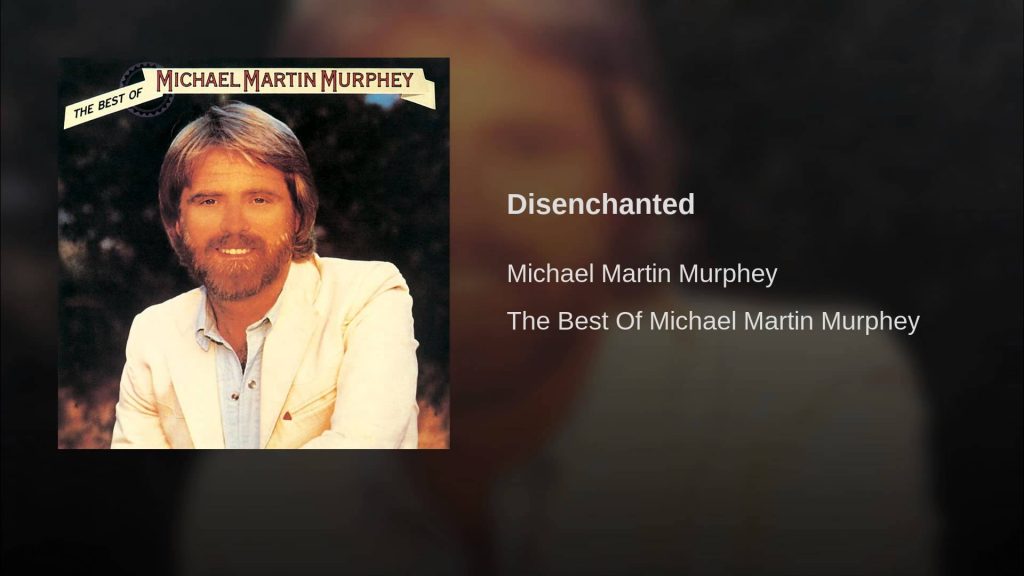
I doubt many of you would know this song below as I tie it in with a major headline (a rather beautiful corny song I would use to diffuse the situation & lighten the mood when my wife got mad at me). Lawsuits are now hanging over the prez’s head, after a long history with a pattern of behavior in abusing women & using hush money to silence those whom he had affairs. The 60 Minutes interview Sunday night will have YUGE ratings, & as the prez hears Stormy tell their story, a number of thoughts will no doubt run through his head, such as this (& these lyrics could apply to him for Stormy, Melania & various other women):
Now she’s disenchanted with me.
Recent Comments